The DeathTech Research Team is a group of anthropologists, social scientists and human-computer interaction specialists based at the University of Melbourne and the University of Oxford. The team have been studying questions at the intersection of death, technology, and society for more than a decade.
Research Projects
The DeathTech Research team has a new ARC Discovery research project:
- Do-It-Yourself Commemoration of the Dead is a project examining the shift to new DIY deathcare practices (such as ‘direct’ cremation without ceremony, creative treatment of ashes, and alternative body disposal arrangements). This grounded interdisciplinary study will produce critical insights on how diverse groups are navigating choices at the end of life as well as the impacts of these DIY practices on the death care industry in Australia.
The DeathTech Research Team has completed three other major projects to date:
- Digital Commemoration studied how people commemorate the dead online, and the socio-cultural implications of these practices.
- Disposal of the Dead: Beyond Burial and Cremation investigated emerging alternatives to and elaborations upon traditional methods of body disposal.
- The Future Cemetery investigated the potential for new technologies to enhance the public’s experience of the cemetery.
Additionally, the team completed a rapid-response research project – Remote, Restricted and Redesigned: Memorialisation practices and the COVID-19 pandemic.
This video was produced for Arts Discovery and funded by the Faculty of Arts.
Publications
To date, the DeathTech Research Team has produced two books (Death and Digital Media and Residues of Death: Disposal Reconfigured) and numerous other academic and popular publications that explore how death, commemoration and mourning have begun to change in response to the shifting technological and social pressures of the 21st century.
Latest news
Engage with us
We are always looking for opportunities to connect with scholars, funerary industry members, designers and death activists. To get in touch, email deathtech-research@unimelb.edu.au
Meet the research team
The DeathTech Research Team is a group of anthropologists, social scientists and human-computer interaction specialists based at the University of Melbourne and the University of Oxford. The team have been studying questions at the intersection of death, technology, and society for more than a decade.
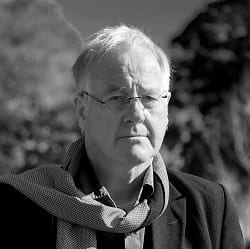
Michael Arnold
Professorial Fellow, History and Philosophy of Science, The University of Melbourne
Michael is a Professorial Fellow at the School of Historical and Philosophical Studies, The University of Melbourne. Michael’s on-going research activities lie at the intersection of contemporary technologies and daily life, including studies of mediated memorials, innovative methods of body disposal and other technologies associated with death. Michael is also interested in philosophical approaches to technologies, in particular, Heidegger, Actor Network Theory, and Object-Oriented Ontology. Michael has been a Chief Investigator on many research projects and has co-authored several research books and over 150 other research publications.
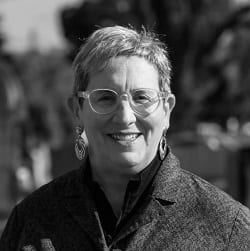
Tamara Kohn
Professor of Anthropology, School of Social and Political Science, The University of Melbourne
Tamara Kohn’s current research focuses on creative practice, death studies, mobility and leisure, methods and ethics, and the anthropology of the body and senses, based on fieldwork in the US, Japan and Australia.
Find an expert・ORCID・Academia・Google scholar・ Linkedin ・Twitter
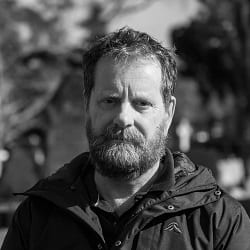
Martin Gibbs
Professor, School of Computing and Information Systems, The University of Melbourne
Martin Gibbs is a member of the Human-Computer Interaction research group. Martin is currently investigating how people use a variety of interactive technologies, such as video games, community networks and mobile phones, for convivial and sociable purposes in a diverse situations (intimate strong-tie relationships, local neighbourhoods, work-based occupational communities, online computer games).
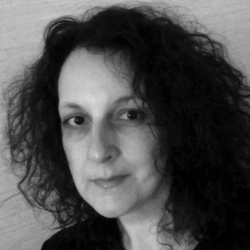
Elizabeth Hallam
Professor of Anthropology, Oxford University
Elizabeth Hallam’s research and publications focus on the anthropology of the body; death and dying; material and visual cultures; human anatomy; three-dimensional models, especially in medical education; making and design; mixed-media sculpture; history and anthropology; experimental research with images and texts; fieldwork, archive and museum-based research in the UK, along with collaborative and multi-sited research in Australia.
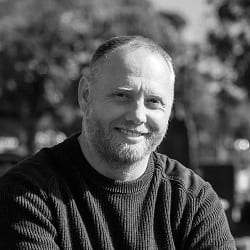
Bjørn Nansen
Associate Professor, Human-Computer Interaction Group, School of Computing and Information Systems, The University of Melbourne
Bjørn Nansen’s research investigates digital technologies, interfaces, platforms, and data in family life. He takes a human-centred approach to understanding the social impacts of digital technologies, and has expertise across a range of qualitative and participatory methods. His current projects focus on children’s mobile data tracking applications, and customisation in digital memorialisation.
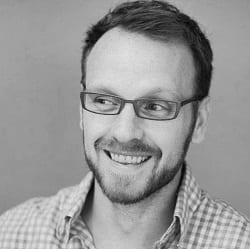
Jed R. Brubaker
Associate Professor of Information Science, University of Colorado Boulder
Jed Brubaker’s research the intersection of technology and mortality. Using empirical, community-based, and design methods, his current research focuses on end-of-life planning, management of post-mortem data and accounts, and digital legacy and storytelling.
Find an expert・ORCID・Google Scholar・Twitter
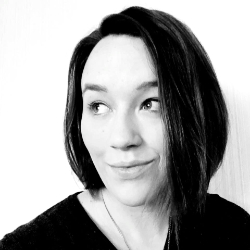
Hannah Gould
Hannah Gould, Senior Lecturer in Buddhist Studies, The University of Melbourne
Hannah Gould is a socio-cultural anthropologist working in the areas of death, religion, and technology. Her research is focused on how the deceased are memorialised and materialised in everyday life, with a regional focus on North-East Asia.

Dr Georgina Robinson
Research Fellow, The University of Melbourne
Dr Georgina Robinson is a social scientific researcher with expertise in the interdisciplinary field of Death Studies, following degree training in the study of religion. Her research largely employs a mixed-methods approach, drawing principally from sociology, anthropology and STS. Her research has predominantly focused on four key areas: methods of body disposal and their popular acceptability; the impact of Covid-19 upon the management of crematoria; the transformation of death and funerary practices in the digital age; and public education of funerary choices and their costs. Georgina joined DeathTech as Postdoctoral Research Fellow on the DIY Commemoration of the Dead Project.
Industry research partners

Deb Ganderton (Vale)
The Greater Metropolitan Cemeteries Trust
Deb Ganderton (vale) was the CEO of The Greater Metropolitan Cemeteries Trust (GMCT) from 2019 to 2022, and a leading figure in the Australian deathcare industry. GMCT manages 19 cemeteries and memorial parks across Melbourne, with two brand new sites under development on Melbourne’s urban fringe. GMCT’s 650 hectares of heritage parklands are visited by almost two million people each year.
Research collaborators
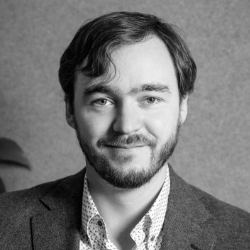
Fraser Allison
Research Fellow, School of Computing and Information Systems, The University of Melbourne
Fraser Allison is a research fellow in the Human-Computer Interaction research group. He studies the design and user experience of technologies for leisure and commemoration, with a focus on natural user interfaces, complex user experiences and the ways in which people draw meaning from technologically mediated activities.

Samuel Holleran
Postdoctoral Research Fellow in Urban Design, RMIT University
Samuel Holleran is a researcher and writer. He has worked as an artist and educator with design firms, universities, and not-for-profits in the U.S., Australia, and Europe. He completed his PhD on the “civic space of the cemetery” with the Death Tech Research Team in 2024. He is currently a Postdoctoral Research Fellow in Urban Design at RMIT University in Melbourne.
Graduate Researchers
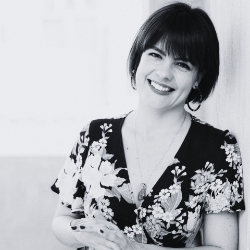
Cindy Stocken
PhD Student, Anthropology, School of Social and Political Studies, The University of Melbourne
Cindy’s PhD builds on her previous research exploring ritual creativity amongst alternative deathcare workers, and is focused on living funerals and similar rituals emerging globally. She is particularly interested in the choices that we make around marking bereavement, who is involved in these choices, what creative work ensues and how participants in newly created or collaged-together rituals respond to them.

Stephanie Longmuir
PhD Student, School of Social and Political Studies, The University of Melbourne
Stephanie Longmuir is a ceremony specialist and deathcare educator. A skilled facilitator, speaker, and writer, she has pioneered conversations around death and dying as founder of myendnotes.com and the Dying to Tell podcast. Stephanie is a regular contributor to Memento Mori and has presented at industry conferences in Australia and the USA. In 2025, she joined the DeathTech team and began a PhD at the University of Melbourne, researching how the rise in direct cremations is reshaping the practices and experiences of families and funeral service providers.
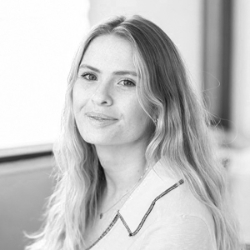
Symon Braun Freck
PhD Student, School of Computing and Information Systems, The University of Melbourne
Symon is a certified thanatologist and death-care researcher pursuing a PhD in Engineering, specializing in DIY memorials and thanatechnology. Drawing on a background in Thanatology and Visual Anthropology, Symon investigates how care, culture, and technology intersect to support personalized, home-based end-of-life practices. Symon’s research and practice focus on expanding autonomy and accessibility in death care through alternative burial methods, community education, and tech-supported end-of-life tools.
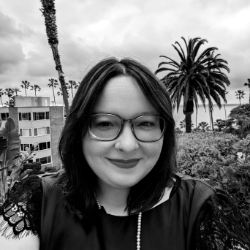
Kate Normand
PhD Student, Anthropology, School of Social and Political Studies, The University of Melbourne
Kate is a qualitative researcher and death educator with a background in social work, psychology, and thanatology. She uses video games as a backdrop to educate about death, dying, grief, and loss. Kate’s research examines death rituals and memorialisation of the dead in online video game communities, specifically investigating how these types of online rituals impact bereavement. She is also interested in pet loss: how humans memorialise and grieve their animal family members.
Research projects
Living and Dying Well in an Age of Peak Death
This project aims to investigate the impact of Australia’s impending transition into an era of Peak Death – when more people will die than ever before due to ageing demographics. This project aims to generate new knowledge in the areas of anthropology and death studies utilising a mixed-methods approach to uncover the distinct preferences of dying Australians and the capacity of deathcare sector to meet them. Expected outcomes include a novel theorisation of the peak death phenomenon, a comprehensive mapping of sector capacity, enhance coordination between deathcare operators and regulators, and a new international scholarly network. This should provide significant benefits for industry, regulatory bodies, and the Australian public.
Living and Dying Well in an Age of Peak Death is funded by the Australian Research Council, Discovery Early Career Researcher Award 2026 (DE260100835)
Do-It-Yourself Commemoration of the Dead
Australian deathcare practices are changing. A significant shift toward do-it-yourself commemoration is radically reshaping the sector and transforming how Australians care for their dead. Such practices include ‘direct’ cremation without ceremony, creative treatment of ashes for memorialisation, consumer-led
DIY funerals, and alternative disposal arrangements for the body. The growing popularity of these new, hyper-personalised forms of commemoration significantly impacts Australia’s $1.7-billion funeral industry and the cultural, social, economic, and commercial environments that surround it. While such practices are proliferating in Australia and overseas, they are poorly understood by academics, the industry, religious and community organisations, and the wider public.
This research project aims to address this gap through an interdisciplinary, multi-methods approach that uncovers the scope, drivers, and implications of these changes, informed through national surveys and fieldwork with families, deathcare professionals, and community leaders. Outcomes will be communicated through symposia, academic publications, public-facing exhibitions and popular media coverage. This research aims to advance scholarship on ritual change and – given the profound importance afforded to the treatment of the dead by families and communities – to extend knowledge in industry and society so as to chart a better path into the future for deathcare in Australia and internationally.
Do-It-Yourself Commemoration of the Dead is a three-year project funded by the Australian Research Council (DP250101054).
The Future Cemetery
The contemporary Western cemetery, dedicated to the dead and their memorials, has become more than a pervasive urban landmark. It is also a central site in the emotional lives and cultural histories of local communities. However, this model is now facing crisis, driven by growing environmental concern, maintenance costs, and an increasingly well-informed public with a complex range of desires for memorialisation.
Around the world, many cemeteries have begun adopting new technologies to improve their visitors’ experiences, reduce their facilities’ environmental footprint, and extend the personalisation of services in response to more diverse community desires. These include the potential for grave location, navigation, and tours, and for digital annotation or augmentation of interment locations. New alternatives to traditional cremation, burial, and mausoleums have also become viable, including resomation (water-based cremation) and natural burial. This project identified and critically assessed the potential of innovative technologies to enhance the public’s experience of the cemetery, diversify service offerings, and strengthen community connections, all in the context of increasingly diverse and rapidly changing social circumstances.
The Future Cemetery was a three-year project funded by the Australian Research Council (LP180100757) with the Greater Metropolitan Cemeteries Trust as Linkage Partner.
Outputs
- The Encyclopedia of Cemetery Technology
- Future Cemetery Industry Workshop 2019 Report
- Future Cemetery National Survey 2020 Report
- An Essential Service: Experiences of Australian Deathcare Workers during COVID-19
- Future Cemetery National Survey Report 2021
Disposal of the Dead: Beyond Burial and Cremation
This research project investigated innovative and scalable alternatives to body disposal, such as alkaline hydrolysis, liquid nitrogen, and other thermal processes, and innovative elaborations on burial and cremation, such as natural burial and carbon trading among crematoria at a time when there is a greater awareness of the economic and environmental costs of both burial and cremation. In doing so, we considered the social, cultural and environmental issues, regulatory challenges, institutional responses, public discourses, personal ethics, and worldviews at stake in the emergence of these disposal technologies.
The research project also asked, how do innovations in these technologies impact on consumers, industry, and broader socio-cultural and metaphysical frameworks for handling death? We explored the practices and perspectives of designers, death workers, industry intermediaries, consumers and representatives of cultural and religious communities as they respond to, interpret and plan for changing possibilities of bodily disposal.
Disposal of the Dead was a three-year project funded by the Australian Research Council (DP180103148)
Remote, Restricted and Redesigned: Memorialisation practices and the COVID-19 pandemic
The COVID-19 pandemic not only represents a serious threat to human life and livelihoods, it has transformed experiences of death, grief, and memorialisation. Social distancing regulations have upended cultural and religious traditions by restricting interaction with the deceased, attendance at funerals, and visitation at cemeteries. Simultaneously, communities have found creative responses to restrictions through new rituals and uses of technology. At the heart of these disruptions and transformations are death care workers, who provide an essential service in the face of uncertainty but are often overlooked in official pandemic responses and media coverage.
In this research project, we tackled the problem of how to manage individual and communal expectations of death rites that uphold human decency and tradition, while continuing to protect death care workers under the conditions of a global pandemic and its aftermath. The team has assessed the Australian response and formulate recommendations for improvement to funeral practices during and following pandemic, with a view to long-term research. Conducting this research ensures that the death care sector will be better equipped to deliver a safe and compassionate response during future disruptive events.
This project was funded by the Arts Collaborative Research Seed Funding Scheme at The University of Melbourne.
Digital Commemoration
The Internet is not just changing our social lives, it is also changing how we approach death and commemoration. The project provides an extensive analysis of contemporary digital commemoration and a detailed account of the wider social and cultural implications of these practices.
The ‘Digital Commemoration’ project brings together researchers from Anthropology, Human and Computer Interaction (HCI), Social Studies of Technology, and Media and Communications. The project will provide an extensive analysis of contemporary digital commemoration and a detailed account of the wider social and cultural implications of these practices. This research continues our previous work on digital memorialisation and the mediation of death online, which has been supported by research grants from the Institute for a Broadband Enabled Society (IBES) and the Australian Communications Consumer Action Network (ACCAN).
Digital Commemoration was a three-year project funded by the Australian Research Council. For more information, visit the project website.

Arnold, M., Gibbs, M., Kohn, T., Meese, J. and Nansen, B. (2018) Death and Digital Media. London: Routledge.
Kohn, T., Nansen, B., Gibbs, M. and van Ryn, L. (eds.). (2019) Residues of Death: Disposal Refigured. London: Routledge.
Journal Articles
Holleran, S. (2024). Library of Stone: Cemeteries, Storytelling, and the Preservation of Urban Infrastructures of Death and Mourning. Footprint, 34(1), 39-52.
Kohn, T., & Gould, H. (2024). On Disrupted Death Rites and COVID-19. Anthropological Quarterly 97(3), 439-447.
Gould, H., & Holleran, S. (2024). Concealment and Care in Deathcare During COVID. Anthropological Quarterly 97(3), 539-556.
Allison, F., Nansen, B., Gibbs, M., Arnold, M., Holleran, S. & Kohn, T. (2023) Reimagining memorial spaces through digital technologies: A typology of CemTech. Death Studies, pp. 1-11.
Allison, F., Nansen, B., Gibbs, M., & Arnold, M. (2023, April) Bones of contention: Social acceptance of digital cemetery technologies, Proceedings of the 2023 CHI Conference on Human Factors in Computing Systems, pp: 1-17.
Arnold, M., Kohn, T., Nansen, B., & Allison, F. (2023) Representing alkaline hydrolysis: a material-semiotic analysis of an alternative to burial and cremation, Mortality.
Holleran, S. (2023) Cheeky Monuments: Photo-Engraved Headstones and Image Moderation in Cemeteries, Photographies, 16:1, 49-69.
Holleran, S. (2023) From graves to gardens: Berlin’s changing cemeteries. City, 27:1-2, 247-261.
Nansen, B., Gould, H., Arnold, M. and Gibbs, M. (2021) Media, mortality and necro-technologies: Eulogies for dead media. New Media & Society.
Westendorp, M. and Gould, H. (2021) Re-Feminizing Death: Gender, Spirituality and Death Care in the Anthropocene. Religions 12(8):667.
Gould, H., Arnold, M., Kohn, T., Nansen, B. and Gibbs, M. (2021) Robot death care: A study of funerary practice. International Journal of Cultural Studies 24(4): 603-621.
Gould, H., Arnold, M., Dupleix, T. and Kohn, T. (2021). ‘Stood to rest’: reorientating necrogeographies for the 21st century. Mortality.
Nansen, B., O’Donnell, D., Arnold, M., Gibbs, M. and Kohn, T. (2019) Death by Twitter’: Understanding False Death Announcements on Social Media and the Performance of Platform Cultural Capital. First Monday 24(12).
Arnold M., Nansen B., Kohn T., Gibbs M. and Gould, H. (2019) The disposition of the destitute. Parity 32(6): 22.
Gould, H., Kohn, T. and Gibbs, M. (2018) Uploading the Ancestors: Experiments with digital Buddhist altars in contemporary Japan. Death Studies 43(7): 456-465.
van Ryn, L., Meese, J., Nansen, B., Kohn, T., Arnold, M. and Gibbs, M. (2018) Managing the consumption of death and digital media: the funeral director as market intermediary. Death Studies 43(7): 446-455.
Lambert, A., Nansen, B. and Arnold, M. (2018) Algorithmic Memorial Videos: Contextualising Automated Curation. Memory Studies 11(2): 156-171.
Nansen B., Kohn, T., Arnold M., Van Ryn L. and Gibbs, M. (2017) Social Media in the Funeral Industry: On the Digitization of Grief. Journal of Broadcasting and Electronic Media 61(1): 73-89.
Meese, J., Nansen, B., Kohn, T., Arnold, M. and Gibbs, M. (2015) Posthumous Personhood and the affordances of digital media. Mortality 20(4): 408-420.
Gibbs, M., Meese, J., Arnold, M., Nansen, B. and Carter, M. (2015) #Funeral and Instagram: death, social media, and platform vernacular. Information, Communication & Society 18(3): 255-268.
Graham, C., Arnold, M., Kohn, T. and Gibbs, M. R. (2015) Gravesites and websites: a comparison of memorialisation. Visual Studies 30(1): 37-53.
Meese, J., Gibbs, M., Carter, M., Arnold, M., Nansen, B. and Kohn, T. (2015) Selfies at Funerals: Mourning and Presencing on Social Media Platforms. International Journal of Communication 9(14): 1818–1831.
Graham, C., Gibbs, M. and Aceti, L. (2013) Introduction to the Special Issue on the Death, Afterlife, and Immortality of Bodies and Data. The Information Society: An International Journal 29(3): 133–141.
Gibbs, M., Mori, M., Arnold, M. and Kohn, T. (2012) Tombstones, Uncanny Monuments and Epic Quests: Memorials in World of Warcraft. Game Studies 12(1).
Book Chapters
Kohn, T., Gould, H. and Nansen, B. (2026) New ‘techniques du corpse’: reflections on future directions for body disposal, In Richardson, S.L., S.E. Wagner & R.E. Toulson (eds.), The Cambridge Handbook for the Anthropology of Death, Cambridge University Press, pp 202-214.
Gould, H., T. Kohn, M. Arnold, A. Fraser. (2024) The Dead who would be Trees and Mushrooms, In Peterson, J.D., N.L. Dekker, & P. Olson (eds.). Death’s Social Meaning and Materiality Beyond the Human. Bristol University Press, pp. 168-179.
Gould, H. (2022) Modern Minimalism and the Magical Buddhist Art of Disposal. Buddhism and Waste: The Excess, Discard, and Afterlife of Buddhist Consumption. London: Bloomsbury, pp. 53-73.
Fordyce, R., Nansen, B., Arnold, M., Kohn, T. and Gibbs, M. (2021) ‘Automating Digital Afterlives’. Disentangling: The Geographies of Digital Disconnection. Oxford University Press, pp. 115-136.
Van Ryn, L., Nansen, B. and Gibbs, M. (2019) ‘Adapt or Die’: the funeral trade show as a site of institutional anxiety. In Kohn, T., Gibbs, M., Nansen, B, and van Ryn, L (eds.). Residues of Death: Disposal Refigured. London: Routledge, pp. 37-51.
Hallam, E. and Kohn, T. (2019) Life in Death’s Residues, In Kohn, T., Gibbs, M., Nansen, B, and van Ryn, L (Eds.). Residues of Death: Disposal Refigured. London: Routledge, pp 1-16.
Arnold, M. (2019) Embracing and Distancing the Materiality of Death through Cremation, In Kohn, T., Gibbs, M., Nansen, B, and van Ryn, L (eds.). Residues of Death: Disposal Refigured. London: Routledge, pp. 124-135.
Kohn, T., Arnold, M., Gibbs, M., Meese, J. and Nansen, B. (2018) The Social Life of the Dead and the Leisured Life of the Living Online, in Leisure and Death: Lively Encounters with Risk, Death, and Dying, edited by Kaul, A, and Skinner, J, Boulder: University of Colorado Press.
van Ryn, L., Kohn, T., Nansen, B., Arnold, M. and Gibbs, M. (2017) Researching Death Online. In L. Hjorth, H. Horst, A. Galloway, & G. Bell (Eds.), The Routledge Companion to Digital Ethnography (pp. 112-120). London: Routledge
Nansen, B., Arnold, M., Gibbs, M. and Kohn, T. (2015) Remembering Zyzz: Distributed Memories on Distributed Networks. In Hajek, A., Lohmeier C. and Pentzold C. (eds.), Memory in a Mediated World: Remembrance and Reconstruction (pp. 261-280). London: Palgrave Macmillan UK.
Nansen, B., Arnold, M., Gibbs, M. and Kohn, T. (2014) The Restless Dead in the Digital Cemetary. In Moreman, C. and Lewis, D. (eds.), Digital death: Mortality and Beyond in the Online Age. Santa Barbara, CA: Praeger.
Kohn, T., Gibbs, M., Arnold, M. and Nansen. B. (2012) Facebook and the Other: Administering to and Caring for the Dead Online. In Hage, G. (ed.), Responsibility. University of Melbourne Press, pp. 128–141.
Conference Papers
Arnold, M., Gould, H., Kohn, T., Nansen, B. and Allison, F. (2021) Cybernetic Funeral Systems. 2021 IEEE Conference on Norbert Wiener in the 21st Century (21CW), pp. 1-4.
Gibbs, M., Carter, M. and Mori, J. (2013) Vile Rat: Spontaneous Shrines in EVE Online. Foundations of Digital Games Conference (FDG’13), 15 May, Chania, Greece.
Bellamy, C., Arnold, M., Gibbs, M., Kohn, T. and Nansen, B. (2013) Mediating the digital hereafter: life beyond the timeline. Prato Community informatics Research Network (CIRN) Conference Oct 28–30 2013, Monash Centre, Prato Italy.
Gibbs, M., Carter, M., Arnold, M. & Nansen, B. (2013) Serenity Now bombs a World of Warcraft funeral: Negotiating the Morality, Reality and Taste of Online Gaming Practices. Proceedings of Internet Research 14.0: The 14th Annual Conference of the Association of Internet Researchers (AoIR), 23–26 October 2013, Denver, USA.
Mori, J., Gibbs, M., Arnold, M. and Nansen, B. (2012) Design Considerations for After Death: Comparing the Affordances of Three Online Platforms. Proceedings of the 24th Australian Computer-Human Interaction Conference, Swinburne University, November 26–30. New York: ACM Press, pp. 395–404.
Public Reports
The Future Cemetery Survey 2021. Allison, F., Arnold, M., Gibbs, M., Gould, H., Hallam, E., Holleran, S., Kohn, T. and Nansen, B. (2021)
An Essential Service: Experiences of Australian Deathcare Workers during COVID-19. Gould, H. and Holleran, S. (2021)
The Future Cemetery Survey 2020. Allison, F., Gould, H., Arnold, M., Nansen, B., Gibbs, M. and Kohn, T. (2020)
The Future Cemetery Workshop 2019. Gould, H., Allison, F., Arnold, M., Nansen, B., Gibbs, M. and Kohn, T. (2019)
Death and the Internet: Consumer issues for planning and managing digital legacies, van der Nagel, E., Arnold, M., Nansen, B., Gibbs, M., Kohn, T., Bellamy, C. and Clark, N. (2017) 2nd edn, Australian Communications Consumer Action Network, Sydney.
Death and the Internet: Consumer issues for planning and managing digital legacies, Bellamy, C., Arnold, M., Gibbs, M., Nansen, B. and Kohn, T. (2013) Australian Communications Consumer Action Network, Sydney.
Digital registers and estate planning. Gibbs M., Bellamy C., Arnold M., Nansen B. and Kohn T. (2013) Retirement and Estate Planning Bulletin 16(3): 63-68.
Engage with us
We are always looking for opportunities to connect with scholars, funerary industry members, designers and death activists. To get in touch, email deathtech-research@unimelb.edu.au
Global Death Studies Centres
The DeathTech Research Team is one of several academic groups around the world who study death, dying and disposal of the dead. Some of their websites can be found at:
- Death Online Research Network (DORN)
- Centre for Death and Life Studies (CDALS), Durham University, UK
- Centre for Death and Society (CDAS), Bath University, UK
- Death & Culture Network (DaCNet), York University, UK
- End of Life Studies, Glasgow University, UK
- Sheffield Death Group, The University of Sheffield, UK